Rituals and Robots
Arts Council Funding Additional Information
Rachel Jacobs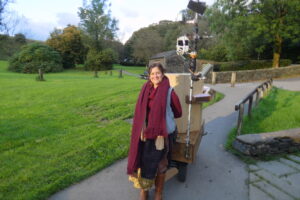 is an award winning interdisciplinary digital artist, researcher and creative educator. She was a founder member of the artist collective Active Ingredient and a pioneer of interactive installation art & early artist video streaming in the late 1990s and mobile and locative art games in the early 2000s. Her interactive, socially and environmentally engaged artworks have toured nationally and internationally. She is one of the artists in residence as part of the The Commons Residency Project, an arts, ecology and music residency in Finsbury Park, and is also a resident artist at Primary in Nottingham. Rachel facilitates imaginative and innovative workshops that help us imagine positive futures in response to climate and environmental change, in universities, schools and community groups.
What Rituals and Robots Will Look Like:
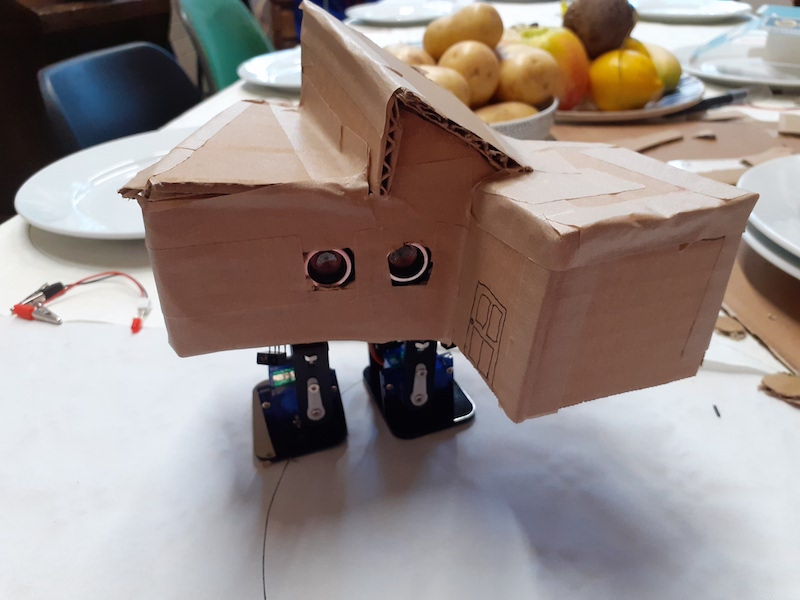
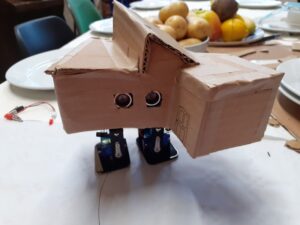
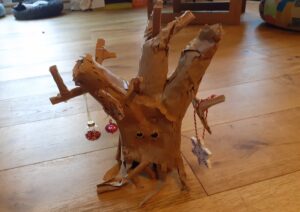
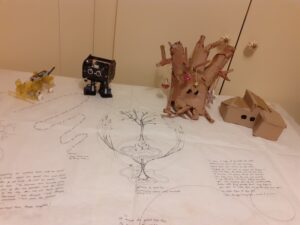
A pre-project Rituals and Robots webpage was set up in 2025 to try out initial ideas about what the project will look like, gauge interest and start conversations with potential partners. In October 2025, a pilot Rituals and Robots workshop took place as part of the Primary Open Studios day in Nottingham, where over 50 people visited my studio and took part in discussions, creative activities and had tea and cake around the table. This workshop was an opportunity to pilot some of the ideas for interactive artworks and developments that will take place as a result of the Rituals and Robots research and development project. Here are some examples of the experiments that were developed for this session.
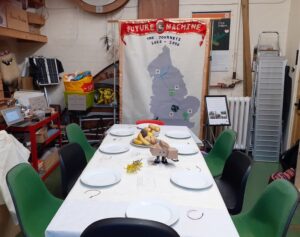

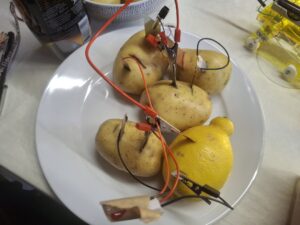
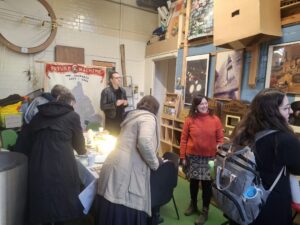


An interactive table was mocked up to bring people together to eat together, inspire conversations and designs that build resilience for the future, take part in ritualised interactions & support shared experiences and conversations. A series of robot characters were also designed to start conversations about the impacts of technology on our everyday lives.
Previous Work:
Future Machine & When The Future Comes
(2019 – 2050)
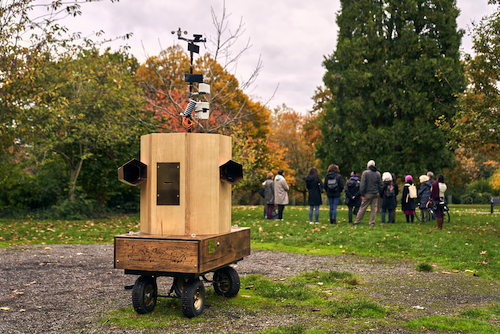 The Future Machine is a witness. It is a large octagon on wheels made of ash, oak, steel, brass and copper, with a hand crank, lever, dials and a slot where personalised ‘future quests’ are printed on cards for people to take away. The appearance of this mysterious artwork in five places across England, at the same times every year until 2050 bestows what may be termed a mythical status on these moments and places. The Future Machine appears in Christ Church Gardens in Nottingham when the trees blossom, at the Windermere-Leven watershed in Cumbria when summer ends, in Rotherfield Peppard in Oxfordshire when the harbingers of spring mark the end of winter, in Cannington village in Somerset when the newly planted trees have abundant green leaves, and Finsbury Park in London when the autumn leaves fall. The Future Machine is due to appear every year for the next 30 years. Newly formed rituals and special occasions are emerging when the artwork appears. Future Machine collects messages for the future from the people who gather around it, prints out a story for people to take away with them, ‘a future quest’ to help people think about the future and plays the messages left by people in the past, and music that changes depending on the weather.
Future Machine is created by Rachel Jacobs in collaboration with carpenter Ian Jones, engineer Matt Little, creative programmer Robin Shackford, computer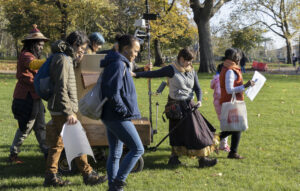 scientist Dominic Price, climate scientist Prof John King, artists Frank Abbott, Juliet Robson, Wallace Heim, Caroline Locke, Esi Eshun, musicians Alexandre Yemaoua Dayo and David Kemp, with participants in public workshops, researchers from the Horizon Digital Economy and the Mixed Reality Lab, University of Nottingham and Prof Esther Eidinow, Department of Classics and Ancient History, University of Bristol. Future Machine is funded with support from National Lottery Project Funding from the Arts Council of England and Horizon Digital Economy, University of Nottingham (ESPRC/RCUK).
 Creating The Future
(2024-2025)
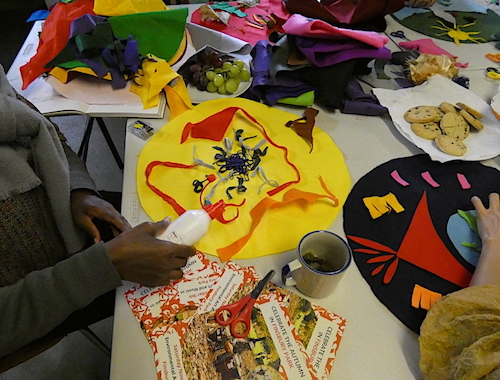
A series of workshops combining arts and crafts with science and ecology to help us imagine positive futures in Finsbury Park as part of The Commons Residency Project in Finsbury Park. These workshops aimed to build an informal community in the heart of Finsbury Park, coming together to learn about resilience in response to some of our questions, confusions, concerns and desires for the future. These workshops combined art, craft making, storytelling and scientific data to slow down debate and find more gentle and positive ways of thinking, creating and collaborating.
 The Prediction Machine
(2013-2018)
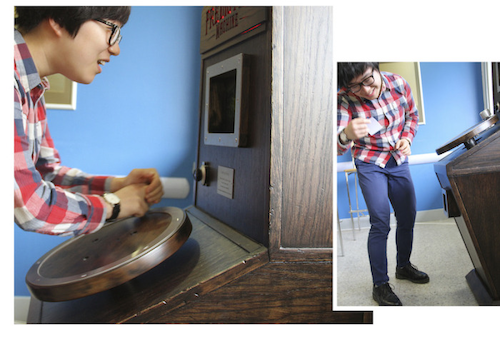
An interactive artwork that marks ‘moments of climate change’ in our everyday lives, tracked and recorded by a machine that prints out predictions based on end of the pier fortune telling machines. The predictions and videos on the screen are devised by participants in workshops that take place alongside the exhibition. Next to it stands the Promises Machine inviting you to write your own promise or wish for the future, and find out more about the science behind the predictions.
The Prediction Machine has been created by Rachel Jacobs, in collaboration with Matt Little, Ian Jones (Sherwood Wood), Matthew Gates, Robin Shackford, Juliet Robson, Dr Candice Howarth, Prof Rob Wilby and Dr Carlo Buontempo and participants in all of the parallel workshops. Developed with the ‘Performing Data’ research team and Dominic Price at the Mixed Reality Lab/Horizon Digital Economy Research, University of Nottingham. With financial support from the Arts Council of England, University of Nottingham, EPSRC Impact Acceleration Account, EPSRC, RCUK and Radar LU Arts.
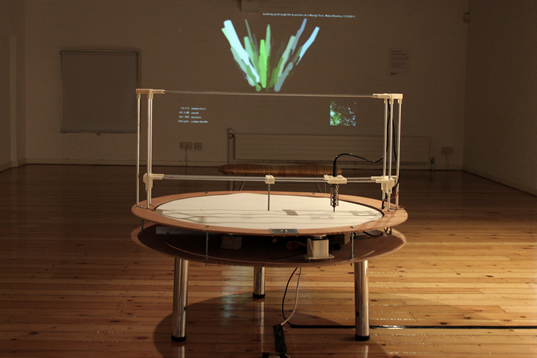 A Conversation Between Trees
(2011)
A Conversation Between Trees connected the Mata Atlantica Forest (in Sao Paulo and Rio de Janeiro) with Rockingham Forest, Hadley Woods and Sherwood Forest (England). An interactive art installation visualised environmental and climate data in forests, alongside a schools exchange between schools in Rio de Janeiro and Nottingham, workshops and interventions. The project by Active Ingredient originally in collaboration with Paulo Hartmann and Marcelo Godoy from Mobilfest BR, and developed with artist/curator Silvia Leal, Horizon Digital Economy at the University of Nottingham, Dr Carlo Buontempo at the Hadley Centre, MET Office UK and Bruno Rezende at the Rio Botanical Gardens.
The interactive installation visualised live environmental data collected from remote trees in forests in the UK and Brazil, alongside both historical and forecast global CO2 data. A turntable on the Climate Machine rotates with a stack of paper on it, while a drawing arm that holds a heating element (a soldering iron) moves in and out; each paper disc represents a single year of CO2 readings, that were then hung in the gallery showing each year of global CO2 data from 1959-2011. Visitors also took part in a mobile sensing experience in a nearby forest.
Chemical Garden
(1999 – 2000)
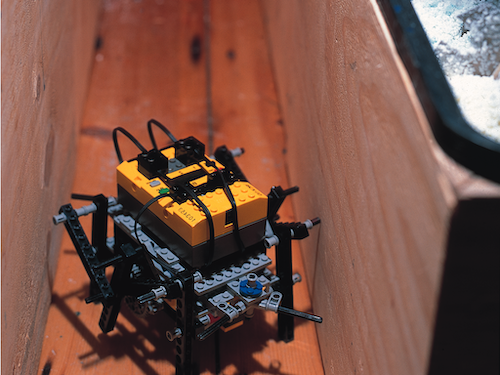
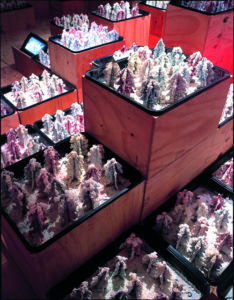
Chemical Garden is a magical garden where robots roam, live webcam images from around the world are transmitted, messages can be sent, and a beautiful forest of crystal trees grow whilst you wonder. Chemical Garden toured venues around the UK varying from art galleries to science centres including:
Angel Row Gallery, Nottingham; The Roundhouse, London; Cornerhouse, Manchester
Magna Science Adventure Centre, Rotherham; Folly Gallery, Lancaster
Active Ingredient
(1996 – ongoing)
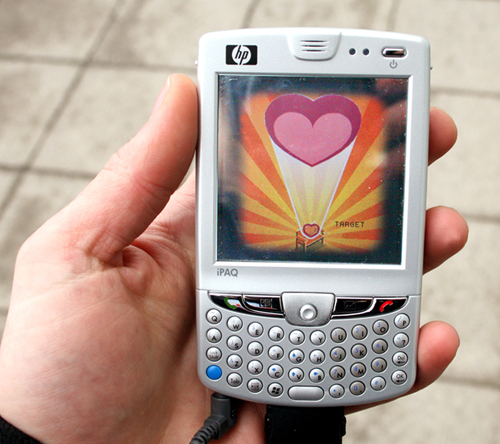
Active Ingredient was an award winning artist-led collective founded by Rachel Jacobs,Matt Watkins, Gareth Howell and Zini Pandya in 1996, later joined by Robin Shackford. Active Ingredient created interactive artworks that toured nationally and internationally between 1996 and 2013. They were pioneers of digital and web art in the early days of the internet, creating a precursor to YouTube through their live streaming video channels developed between 1999-2007 and their early locative mobile phone games, developed with the Mixed Reality Lab and Hewlett Packard from 2005-2007.
They collaborated regularly with other artists, musicians, researchers, workshop facilitators, galleries, curators, scientists, technologists and designers. By 2013 the members of the collective who remained paused working together under the banner of Active Ingredient, whilst they each continued making artworks, cooking, writing, lecturing, teaching, designing, making, researching, being part of communities and engaging communities. In 2024, Active Ingredient returned to begin an archiving project of their pioneering interactive artworks and hosting the longitudinal and ambitious ‘When The Future Comes’ project.
Additional Practitioners (Critical Network):
Esi Eshun – Video & Performance artist & Writer (London)
https://researchers.arts.ac.uk/2118-esi-eshun
Wallace Heim – Performance & Visual Artist, Writer & Philosopher (Cumbria)
https://wallaceheim.com/
Bronac Ferran – Curator & Writer (London)
https://cloudmemory.com/
Rebecca Beinart – Artist, Facilitator & Curator
https://rebeccabeinart.info
Frank Abbott – Digital, Performance & Video Artist & Researcher (Nottingham)
https://vimeo.com/frankabbott
Giles Lane – Artist, Designer, Researcher & Social Engagement Consultant at the Royal Academy of Engineering (London)
https://gileslane.net/
Rose Levinson – Writer & Professor of Cultural Studies (London)
https://www.emergingvoices.co.uk/about
Robin Shackford – Creative Programmer & Digital Artist (Nottingham)
https://www.i-am-ai.net/robinshackford/